The Main Topic:
Women- Status and laws. Fiction and Reality.
What are the choices for these women?
Explore their rights and their positions.
Employment choices and
Inheritance laws are a good area to start
with. As you explore these aspects
You will learn more about the different roles
that women performed during this period.
1. Women status:

The idea that home is the Kingdom of the idea of modern women
in first class. It was the Industrial Revolution in the eighteenth
century, some profound effects on the lives of women in
forms of work and showed the patterns of living were not
common before. Before the industrial revolution, the men and
women working side by side in the fields, for example, that
there was no strict separation between what is inside the house
and what is outside. With the beginnings of the nineteenth
century, the shape features of the emerging middle class,
which linked the life-sustaining modern industrial production and
new forms of work based primarily on the concept of «the
division of labor».
Thus the family that the husband goes to work outside the
home in the factory or office, and leave the house under the
care of his wife. At this moment crystallized the concept of
public sphere and private sphere, and the public sphere has
been associated with the work of men outside the boundaries of
the defenses pay the house, and define the work of the private
sphere of women's unremunerated work within the home. And
gradually formed a new ideology of what femininity, women have
become so expensive the auspices of her home and her children
during her husband go to work outside the home. And identified
the characteristics of these inherent femininity of a woman is
the ideal middle class to maintain in the absence of her husband
and forced to do hard work outside the home.
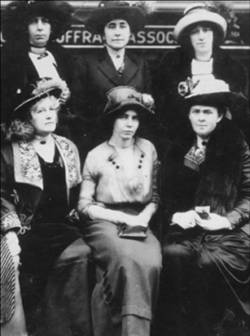
In the era of Queen
of new and established as the ideal affected have been made
to the people of the Queen Victoria, the sponsor of the family
and the perfect symbol of motherhood.
2. Women reality:
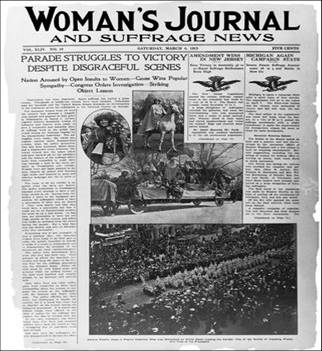
Women in the medieval centuries, by considerations of church
weren’t participated in social life and even sometimes seen as a
source of evil.
Christianity, looked to women as « sorce Of Evil», as a result of
their mother’s«Eve» sin which leading Adam eat the forbidden
apple and disobey to the orders of God ,so the women have to
pay the price.
Women had to respect certain social rules e.g. Not to raise her
head, eyes, even not their voice in front of men. They couldn’t
also participate in political life and have no seat in Parliament
and should not be, except the women at the highest power in
the kingdom as queens or Princesses.
To those beliefs that hinder women and prevent them from their
right to learn and work had to constantly struggle to obtain
equality between the two sexes in education and work and even
in politics.
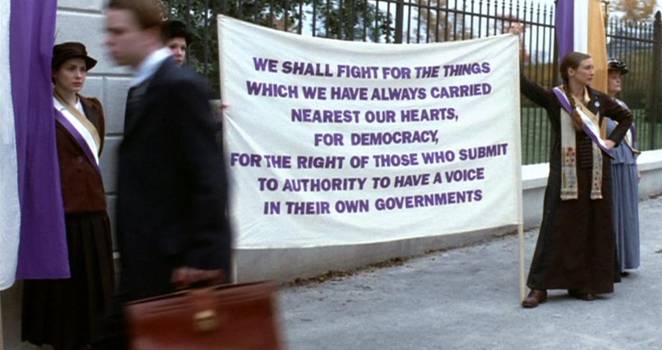
European women have been at the forefront of the struggle
which has spread to other parts of the world, but the struggle
will take a long time in the face of backward mentalities.
Where he was granted the right to vote and be involved in the
political life of the vulnerability of the family at risk. This
vision has spread more and more in the Latin countries such as
France and European countries such as the Anglo-Saxon Britain
and the United States, Finland and Norway were more
understanding of the rights of women from other countries.
.
Women's movement first emerged in the Western world in the
eighteenth century receded demands the right to work mainly in
education and the right to vote.
Ruled that the movement for many years in their struggle to
achieve those demands to the intransigence of the customs and
traditions of a society that is controlled by men.
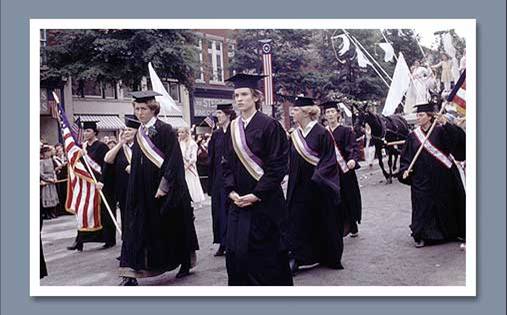
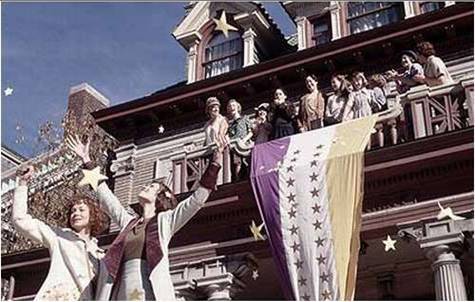
(Here are some pictures of the movie that’s based on women
laws and reality during the18th century)
women's rights activists Alice Paul and Lucy Burns whose efforts
gave American women the right to vote.
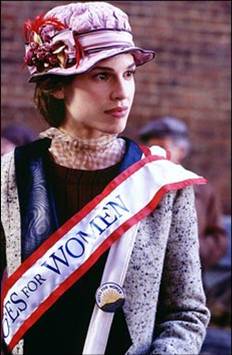
The film begins as Alice Paul and Lucy Burns return to the
involved in the suffrage movement. As the duo becomes more
active within the National American Woman Suffrage
association (NAWSA), they begin to realize that their ideas
were much too radical for the established activists, particularly
Carrie Cham ban Catt (Anjelica Huston). Both women eventually
leave NAWSA and create the national woman’s party(NWP), a
much more radical organization dedicated to the fight for
women's rights.
Over time, tension between the NWP and NAWSA grows as
NAWSA leaders criticize NWP tactics such as direct protesting
of a wartime President and picketing directly outside the White
House with their Silent Sentinels. Relations between the
American government and the NWP protesters also intensify, as
hundreds of women are arrested for their actions, though the
official charge is "obstructing traffic." They are sent to
Occoquan workhouse for 60-day terms where they suffer poor
conditions. During this time, Paul and other women undergo a
hunger strike during which prison authorities force feed them
milk and raw eggs through a tube. News of their treatment
leaks to the media through the husband of one of the
imprisoned women who had been able to lobby for a visit (the
suffragists are depicted as otherwise unable to see visitors or
lawyers). The media dubs these women 'Iron Jawed Angels.'
Pressure is put on president
opportunity to lobby tirelessly for the nineteenth amendment to
the Constitution.
Paul, Burns and all of the other women are eventually pardoned
by President Wilson. The Supreme Court rules that their
arrests were, in fact, unconstitutional.
Resources:
Shorouk newspaper
Thawra newspaper
Women law:
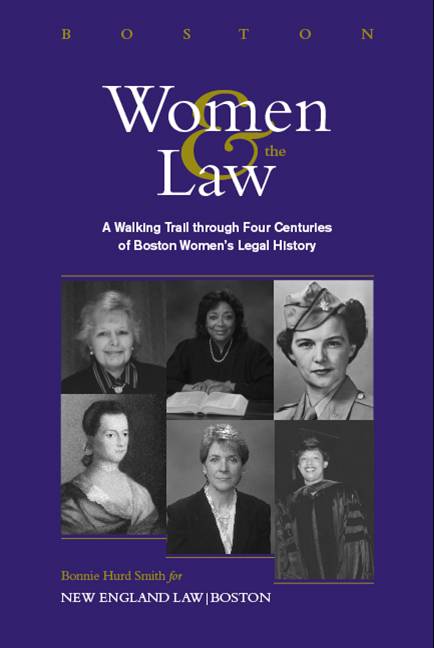
Were in 18th century there are no other times when women were so disrespected. Despite this, women have never given up their struggle for equality. The inhibition on women is unprecedented in 18th century. They are confined to their houses most of time, doing needlework, gossiping, reading, and drawing, having party or ball on occasion. To marry a disapproved husband or entering into illicit relationship is always very serious. These social principles that actually bind women’s hands and feet are very serious. They might be described as the grammar of conduct. Now grammar is something everyone should learn and must learn. The social principles, like a mould, sharpen women’s action and make them of “ideal” and “perfect” famine according to their standards.
Women’s rights and interests are not ensured by legislation. Married women had no legal existence. After marriage, women have to be bound to their husband financially and legally. A woman gives up all her own property. And her former family named upon marriage according to law. She remains at the financial mercy of her mate, and if her spouse died, she found herself subject to the terms of her husband’s will and to legal codes that privileged a male line of inheritance, with few employment options. Women’s voice is too weak, and their rights and even their comfort are not ensured. Women could be no means play any part in social life or realize their value in any way. Too ambitious is not feminine and is an unpardonable conduct. So in 18th century, there is little case of women striking up their own career, since few occupations are opened to them and those few governesses are usually not highly respected and well paid. Though some women try to set working at home as a writer. They were “attacked for having temerity to write without necessary learning and taste. Only desperate financial need, preferably to support the aged parents, a sick husband, or destitute children, could excuse a women’s exposing herself in print to obtain money.
Accordingly, women’s preface often apologize for writing by alluding to distresses of this sort, causing reviewers frequently to condescend kindly to their work, though increasingly they bemoaned the number and grammar of ‘female scribbles’”. To study why women are in low position, it is very necessary to make clear those ladies’ financial state first. Women marry because marriage is the only allowed route to financial security. The legislation makes it difficult and embarrassing to divorce. The only reason for divorce accepted by the court is sexual infidelity of the wife. Besides, it will cost quite a bit of money, so that only rich family could afford to divorce. However, those few rich family wouldn’t brave all embarrassment and humiliation. It seems that marriage is the best ending to the women at that time. So it comes that many women marry for money. The choice is not made by women but by situation and society.
Women fictions
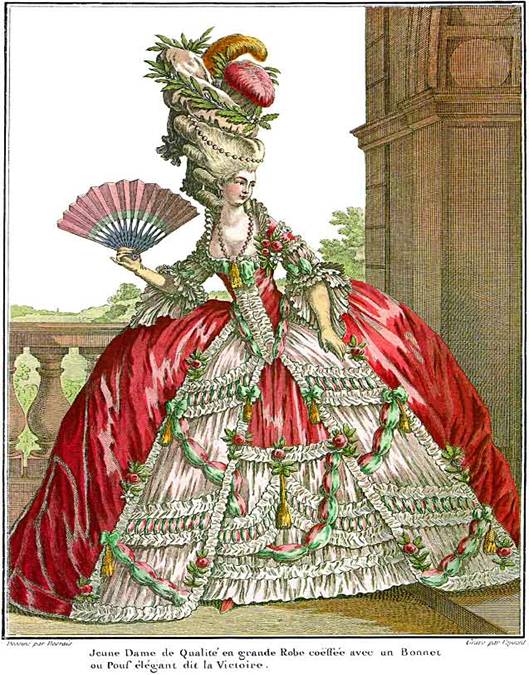
Women and fiction at the later 18th century
During the half-century or so that is known as the age of Sensibility, women established themselves as novel- writers with amazing alacrity. And that was reasonable to assume the access to the novel-writing which placed women in a relation to the culture of the period that was different from these years would tell a unique tale about women's concerns. The women’s novels at the 18th are interesting primarily because of the ways in which they have been able to tell different story from that which culture at large has seemed to tell. These novels were written by some different women in the second half of the eighteenth century.
Each tells a carefully constructed story and each offers a distinctive account of family experience and the terms of female success. In doing so, each of them articulates a distinctive set of obstacles to a uniquely realized understanding of female desire. Their novels defy attempts to generalize about “a woman’s writing in the later 18th century”.

WOMEN AND FICTION:
those by the participated alike in process of feminization
that began in the later eighteenth century, and women
are as well as men and that could be seen in general to
be inculcating the values of the bourgeois ideology of the
women’s role in the family and in the home.
subject.
|
*about Romance: |
|
The end of the girl’s journey, if successful, will bring her to her place where the boy will find her, like sleeping beauty, awaiting him, Prince Charming. |
|
|
|
Here we can see de Lauretis’s argument the both subtle and profound. If myth subtends narrative, or if, even more to the point, myth depends on narrative, and then the stakes in any culture would be as high as they are in the cultural situation that describes here. |
|
|
characters into the kind of suspended animation that de
Lauretis describes. Indeed, the great success of women
novelists in the eighteenth century suggests that
perhaps they bought too quickly into the system of
fictional narrative that would betray them.
Women choices
During the eighteenth century, While the essential role of most
women continued to be managing all aspects of their households,
doing so took on political overtones: the commitment of the
women was critical to maintaining the decision to boycott British
goods caused home manufacturing to become both a statement
of defiance and a necessity. Even those women whose social
standing afforded increased leisure took up spinning and other
activities to replace imported goods. In the early days leading
up to
musters and made cartridges.
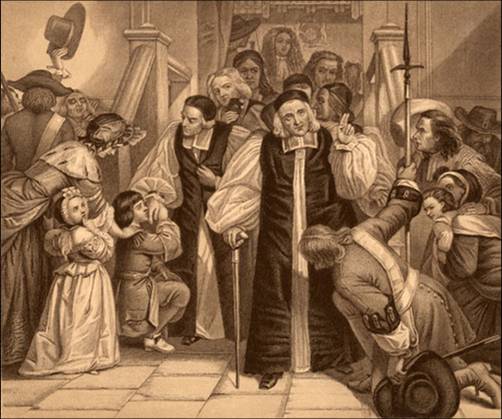
War, when it came, touched everyone: resources were scarce
leading to high inflation; invading troops destroyed farms and
homes; and the absence of husbands and fathers left some in
danger of starvation. Some women were able to continue to
manage homes, farms and shops but others were unable to
survive on their own and forced to abandon their homes and
follow their husbands with the army.
Women who traveled with the army were known as campfollowers
and did so for many reasons: inability to provide for themselves
at home; fear of attack; eviction by troops; desire to be with
husbands; the attraction of a paying job and rations (even if
their pay and rations were minimal), or in some cases as
settlers selling to the army.
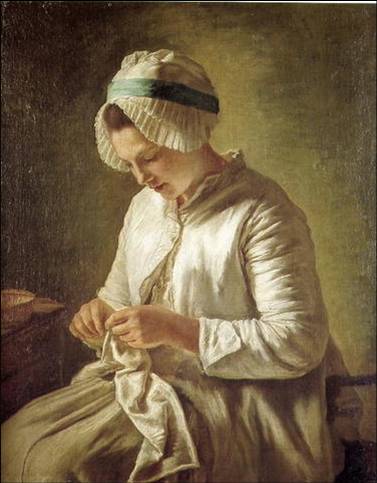
Well over 20,000 women followed one army or another and
transformed camps into small towns. In some ways, women were
an important element because they carried out tasks such as
laundering and nursing (both of which were paid) which men were
unwilling to do and without which the army would have been even
more seriously depleted by disease. In addition, women
performed duties as cooks, food foragers, spies and water
carriers (all unpaid). However, the number of women generally
exceeded that which would have been required and often
represented a nuisance to commanding officers: women and
accompanying children used scarce rations and slowed the
movement of the army. Nevertheless, they were tolerated
because they performed important jobs for the welfare of the
armies and for fear that the men would desert if their families
were sent home.
Women Rights:
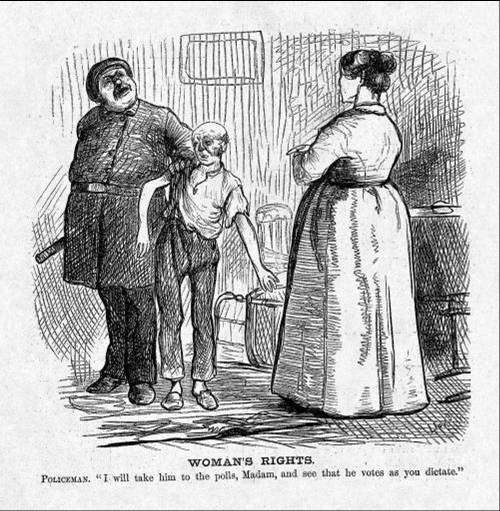
Before and in the 18th century, woman faced a lot of unfair laws in
major law is that woman can not inherit her father and all her father's money will go to the closest cousin. So the young lady has to look for a man with fortune to marry her. And to be accepted she has to be accomplished lady. She has to learn the modern languages, playing piano, singing and dancing.

The eighteenth century brought the beginning of the British Cultural Revolution. With the increasing power of the middle class and an expansion in consumerism, women's roles began to evolve. The economic changes brought by the new middle class provided women with the opportunity to be more directly involved in commerce. Lower-to middle-class women often assisted their husbands in work outside the home. It was still thought unseemly for a lady to be knowledgeable of business so, though some class distinctions were blurring, the upper class was able to distinguish themselves from the rest of society.

The Cultural Revolution, mounting literacy rates among the lower classes caused an increase in publishing, including the rise of the periodical. Though women's writing during this period continued largely to be an extension of domestic life, and focused mainly on pragmatic, practical issues, women found a wider market for publication. The act of professional writing, however, was still considered "vulgar" among the aristocracy. The political and social changes that took place in the eighteenth century helped the way for these women to advance the cause of women's rights.
Women positions
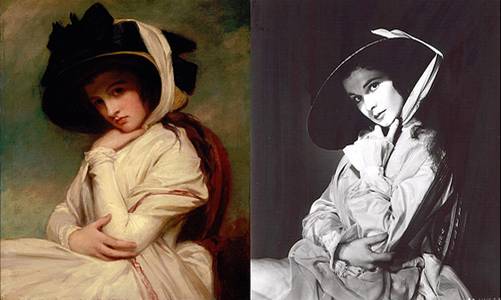
During the eighteenth century, married women’s lives revolved to a large extent around managing the household, a role which in many cases included partnership in running farms or home businesses. The defiance of English rule and the onset of the war disrupted the usual patterns of life in many ways including impacting how women responded to events surrounding them. While the essential role of most women continued to be managing all aspects of their households, doing so took on political overtones.
Even those women whose social standing afforded increased leisure took up spinning and other activities to replace imported goods.
War, when it came, touched everyone: resources were scarce leading to high inflation; invading troops destroyed farms and homes; and the absence of husbands and fathers left some in danger of starvation. Some women were able to continue to manage homes, farms and shops but others were unable to survive on their own and forced to abandon their homes and follow their husbands with the army.
Women who traveled with the army were known as (Campfollowers) and did so for many reasons: inability to provide for themselves at home; fear of attack; eviction by troops; desire to be with husbands; the attraction of a paying job and rations (even if their pay and rations were minimal), or in some cases as settlers selling to the army.
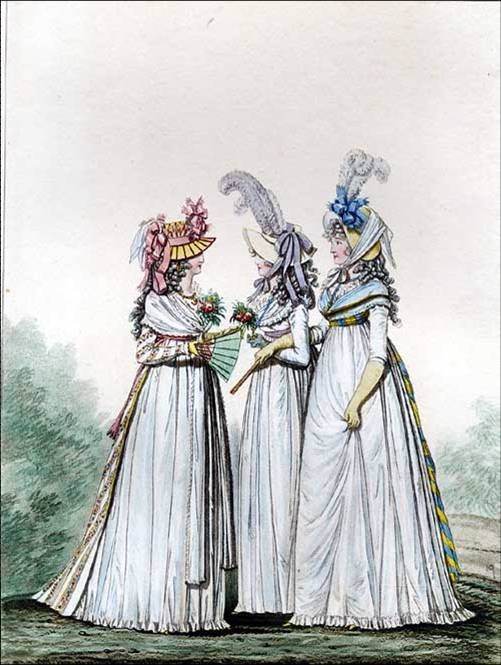
In addition, women performed duties as cooks, food foragers, spies and water carriers. Nevertheless, they were tolerated because they performed important jobs for the welfare of the armies and for fear that the men would desert if their families were sent home.
The role of campfollowers with the French army varies somewhat in that the men were rarely accompanied by their wives (in fact, marriage was essentially forbidden) and there were very few women who traveled with the army, in sharp contrast to the British and Continental units.
19th century:
Women’s Roles in the Late 19th Century
"The average farmer’s wife is one of the most patient and verworked women of the time." The American Farmer, 1884
Introduction
Despite the growth of industry, urban centers and immigration,
The "Cult of Domesticity” first named and identified in the early part of the century, was solidly entrenched by late nineteenth century, especially in rural environments. The beliefs embodied in this ‘Cult’ gave women a central, if outwardly passive, role in the family. Women’s God-given role, it stated, was as wife and mother, keeper of the household, guardian of the moral purity of all who lived therein. The Victorian home was to be a haven of comfort and quiet, sheltered from the harsh realities of the working world. Housework took on a scientific quality, efficiency being the watchword. Children were to be cherished and nurtured. Morality was protected through the promulgation of Protestant beliefs and social protest against alcohol, poverty and the decay of urban living.
Pulling against these traditions was the sense of urgency, movement and progress so evident in the geographical, industrial, technological and political changes affecting the country. Women’s roles were meant to steady all this uncertainty, but women could not help but see opportunities for themselves in this growth. Jobs opened up in factories, retail establishments and offices, giving single women new options. Education became mandatory for both genders in many states. Women sought higher education, too, first in all female institutions and then in co-ed environments. The push for women’s rights, with suffrage in the forefront, also gathered momentum. Regardless of these changes, throughout the nineteenth century, 95% of married women remained "at home."
The proliferation of popular literature and the expansion of communications through the press and other means could not have helped but enlighten rural women to the opportunities opening up for their gender. Their lives, however, were tied to house and children, endlessly unacknowledged work, little opportunity for outside contact or variety of experience, and little relief from everyday triviality. The extent to which farm women felt any fulfillment or larger meaning may indeed have been tied to how well they could balance the tensions between the expectations of the culture and the day-to-day, unrelenting tasks of housekeeping, child rearing and farm life.
